-
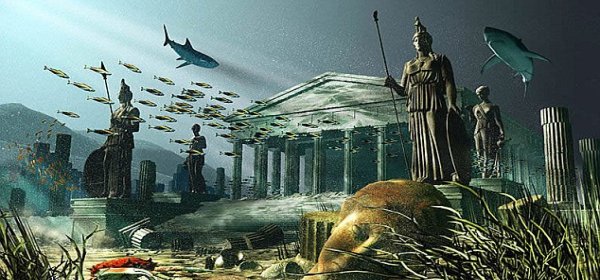
From the fall of Atlantis...
-

To a forgotten past...
-

Clues in ancient maps...
-
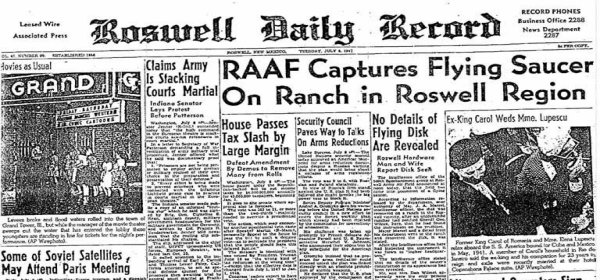
And accidental revelations...
-
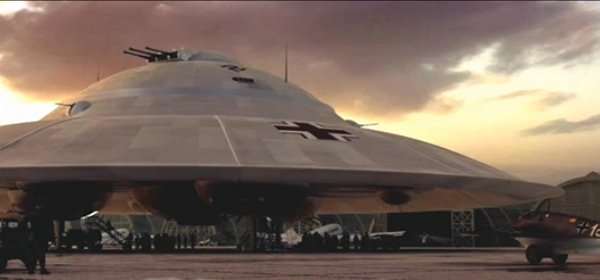
The post war truth revealed...
Wernher von Braun was another German scientist who entered the USA under Operation paperclip at the end of the war. Von Braun was not a reluctant Nazi. Indeed, "he joined the
National Socialist Aviation Corps, getting his pilot's license in 1933, the DAF
trade organisation, a hunting organisation associated with the Nazis, the air
raid protection investigation, and the SS horseback riding school" (19). Von
Braun's own admissions in US Army records further show that he was a former SS
Major who frequently visited the underground rocket factory where 25,000
prisoners from the concentration camp Dora had died. According to the former
executive producer of CNN's investigative unit, Linda Hunt, von Braun attended a
meeting that discussed rounding up of citizens off the streets of France to be
taken to Dora.
As the war entered its dying throws in 1945, von Braun ordered two men to
find an abandoned mine in the Harz Mountains to hide data about the V-2s.
Several large boxes were then placed in a discovered cave and von Braun sent his
younger brother Magnus off on a bicycle he had borrowed from a local innkeeper
to look for Allies to whom they could surrender. Von Braun and his scientific
staff duly surrendered to the US Army whilst most of the production engineers
were taken prisoner by the Soviets (20). After entering America as part of Project Paperclip, on a pay
of $6 a day plus lodging in a military installation, Braun worked on guided
missiles for the US Army. He returned to Bavaria in 1948 to marry his second
cousin and he later served as Technical Director then later Chief of the Guided
Missile Development Division of Redstone Arsenal from 1950 to 1956 whilst living
in Huntsville, Alabama (21). Von Braun was later appointed Director of
Development Operations Division of the Army Missile Agency, which developed the
Jupiter-C rocket that was to successfully launch the western's hemispheres
first satellite, 'Explorer-I' on 31st January 1958, auguring the birth of the
American Space Programme (22).

Two years later von Braun and his team were transferred to
NASA's Marshall Space Flight Centre where he served as Director from July 1960
to February 1970. During the 1950s and 60s he achieved an almost celebrity
status as one of Walt Disney's experts on the 'World of Tomorrow'. In 1970 he
became NASA's associate administrator and without him, it is unlikely that the
organisation would ever have put man on the Moon.
Over a course of twenty years, von Braun received
approximately 25 honorary degrees and he accepted many other awards and medals,
presented to him from small cities, to NASA and even the President. His dossier was apparently rewritten so he didn't appear an
enthusiastic (alleged) Nazi and he attempted to play down his real Nazi
involvement by claiming "In 1939 [sic] I was officially demanded to join the
National Socialist Party. At this time I was already Technical Director at
Peenemunde ... The technical work had ... attracted attention at higher and higher
levels. Thus, my refusal to join the party would have meant that I would have to
abandon the work of my life. My membership in the party did not include any
political activity (23)."
However, Von Braun's claim was simply untrue, for other
scientists successfully used an old rule of the Weimar Republic that was still
in use, forcing anyone in the military to abstain from political
affiliation. Wernher von Braun's mentor, Hermann Oberth also entered the
US after the war under Operation Paperclip. Born 25th June 1894 in
the Transylvanian town of Hermannstadt, Oberth is widely
recognised as the founding father of modern rocketry, having published the paper
in 1923 that was to so inspire von Braun, Die Rakete zu den
Planetenraumen (By Rocket into Planetary Space.) This was followed by a
longer version (429 pages) in 1929 that was internationally regarded as a work
of tremendous scientific importance.
When in his thirties, Oberth took Wernher von Braun (who
affectionately referred to Oberth as his 'teacher') on as an assistant, and they
worked together at Peenemunde developing the V2 rocket. After entering the US at
the end of the war along with the remaining 100 V2 rockets and components,
Oberth again worked with Von Braun as the entire Peenemunde team was
re-assembled at the White Sands Proving Grounds. Oberth and Von Braun continued
their work and it was a later development of the same V2 rocket which had
inflicted so much damage on Northern Europe that was eventually to propel the
first American into space in the Saturn V rocket. Oberth retired three years
after entering the US and returned to Germany where he headed us the Oberth
Commission for the German Government into the UFO phenomenon.
Another scientist who brought new knowledge to America was
Viktor Schauberger. Although there is no evidence that Schauberger had Nazi
sympathies, he was viewed by the Americans as a collaborator and put 'into
protective custody' for six months at the end of the war. Dr Walter Miethe, and Rudolph Schriever also entered America
under Operation Paperclip, however it is believed that their colleague Habermohl
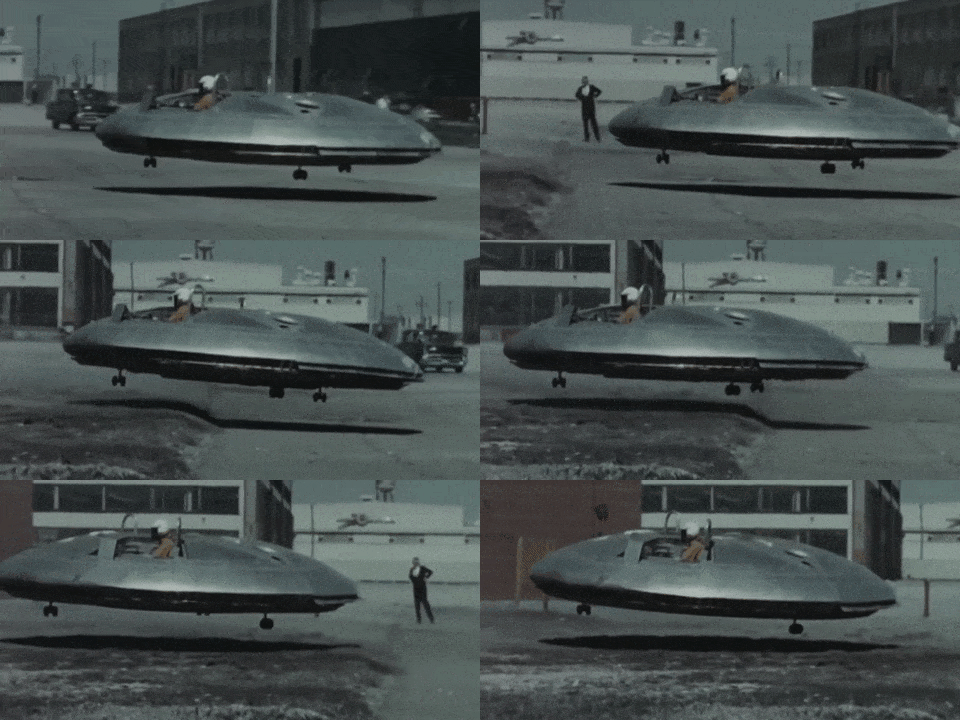
fell into Russian hands. Whilst in the US, Miethe continued his 'flying disk' work
working primarily for the US Air Force, however he was sub-contracted to A. V.
Roe and Company (A V Row prototype top).


|

|

Explore forgotton clues scattered throughout history that are suggestive
of an alternative history.
Join the world-wide search for evidence
of a lost civilisation that predates
known history.

Has Earth already been contacted by other civilisations either in the distant past or in recent centuries?

A discussion of the emergence of advanced technologies and the bizarre invasion of Antarctica after WWII.

A discussion of sightings of UFOs in the sky above Earth and within the solar system, including Moon anomalies.

Evidence the Earth has been visited by extraterrestrials and how the public had been subject to disinformation.

Violations is now available to purchase in
paperback or Kindle versions complete
with exclusive additional content!
